Author: Deon Nguyen

  • Science, Power, and Public Trust: The Legacy of Silent Spring

    Rachel Carson’s Silent Spring, published in 1962, marked a decisive turning point in the relationship between science, public consciousness, and political reform in the United States. More than an exposé of pesticide use, the book fundamentally altered how Americans understood their environment and their responsibility to protect it. Carson reframed environmental decay in the minds of the public. Initially viewed as an abstract and inevitable consequence of technological progress, Silent Spring argued that environmental destruction was a direct result of human decision-making, corporate power, and governmental neglect. In doing so, Silent Spring catalyzed the modern environmental movement by transforming ecological concern into a moral and political imperative.

    Science, Authority, and Public Trust

    Before Silent Spring, environmental issues rarely occupied the center of national political discourse. Chemical pesticides, such as DDT, were widely celebrated as symbols of postwar progress, credited with boosting agricultural productivity and controlling disease. Government agencies and chemical manufacturers reassured the public that such substances were safe, effective, and essential to economic growth. This trust in scientific authority, however, was unchallenged. The so-called data collected by such institutions flowed to citizens without meaningful public scrutiny.

    Carson disrupted this dynamic by challenging the assumption that scientific advancement was inherently benign. Drawing on years of biological research, she exposed the ecological consequences of indiscriminate pesticide use, demonstrating how chemicals accumulated in food chains, poisoned wildlife, and posed long-term risks to human health.¹ Importantly, Carson, as one of the foremost scientific communicators of her time, translated complex scientific data into accessible prose, empowering ordinary citizens to question expert claims and demand accountability. In doing so, she repositioned science as a tool for public inquiry rather than an instrument of institutional reassurance.

    The Assault on Credibility by the American Government and Chemical Manufacturers

    The reaction to Silent Spring revealed deep anxieties about authority and dissent in Cold War America. Chemical companies and their allies launched aggressive campaigns to discredit Carson, framing her as alarmist, emotional, and unqualified.² These attacks often relied on gendered assumptions, portraying Carson’s concerns as hysterical rather than scientific. Such criticism, however, backfired. Rather than silencing Carson, it underscored her central argument, being that powerful interests were willing to dismiss evidence to preserve profit and control.

    CBS’s broadcast of Carson’s interview showed that she was a calm and reasonable scientist, starkly contrasting the perception that pesticide manufacturers had been pushing. Public defense of Carson by scientists, journalists, and civic organizations elevated the book beyond a scientific critique into a broader cultural challenge. The controversy itself became a vehicle for mobilization. Americans began to see environmental harm not as accidental, but as the predictable outcome of unchecked industrial power operating with minimal oversight.

    From Awareness to Activism

    Silent Spring succeeded, because it connected ecological damage to everyday experiences. Carson warned that the loss of birds, insects, and clean water would not remain distant or theoretical. It would eventually affect homes, food, and future generations.³ This framing helped shift environmentalism from a niche conservation ethic to a mass movement concerned with public health and institutional accountability.

    The book’s influence was quickly felt in the political arena. President John F. Kennedy ordered a federal review of pesticide policies, and congressional hearings soon followed.⁴ While Carson herself avoided overt political advocacy, her work laid the intellectual foundation for regulatory reform. By the late 1960s and early 1970s, environmental protection had become a legitimate policy objective rather than a peripheral concern.

    The Legacy of Silent Spring on Policy

    The long-term effects of Silent Spring were profound. The establishment of the Environmental Protection Agency (EPA) in 1970 and the eventual ban of DDT in the United States reflected a new willingness to regulate industry in the name of ecological and public health.⁵ These reforms were not inevitable. They emerged from a cultural shift that Carson helped initiate by changing the perception of environmental harm from a collective moral failure to an unfortunate side effect of progress.

    Equally important was the movement’s emphasis on citizen engagement. Environmental activism increasingly relied on grassroots organizing, public education, and litigation, echoing Carson’s insistence that informed citizens must hold institutions accountable. Her work demonstrated that environmental protection was inseparable from democratic participation.

    A New Moral Framework

    In my final analysis, Silent Spring reshaped the environmental movement by redefining the relationship between science, power, and the public. Carson achieved two aspects. She warned of ecological collapse, and she challenged Americans to reconsider the costs of unquestioned technological optimism. Her legacy lies in the enduring idea that environmental stewardship is a civic responsibility.

    In the early 1960s, a time when public faith in institutions was high and dissent was often marginalized, Carson gave voice to a new form of public skepticism grounded in evidence and ethics. Silent Spring thus stands as a foundational text of modern environmentalism, one that transformed private concern into public action and permanently altered how Americans understood their place within the natural world.

    Bibliography

    Carson, Rachel. Silent Spring. Houghton Mifflin, 1962.
    Lear, Linda. Rachel Carson: Witness for Nature. Henry Holt, 1994.
    Rome, Adam. The Genius of Earth Day. Hill and Wang, 2013.
    Graham, Frank. Since Silent Spring. Houghton Mifflin, 1970.
    U.S. Congress. Pesticide Control Act Hearings, 1963.
  • John F. Kennedy and the Cuban Missile Crisis

    The Cuban Missile Crisis was not only the most dangerous confrontation of the Cold War. It was the defining moment of John F. Kennedy’s presidency. The events of October 1962 tested the limits of U.S. power, as well as President Kennedy’s political and rhetorical authority at home. The administration’s deft navigation between military pressure and diplomatic compromise prevented a nuclear catastrophe, but it also transformed Kennedy’s overall standing among American citizens. In the aftermath, Kennedy emerged as simultaneously a Cold War steward and a leader who had demonstrated prudence, resolve, and restraint in his approach to the Cuban Missile Crisis. Ultimately, the crisis reshaped public confidence in the presidency itself, revealing how foreign-policy decision-making could fundamentally alter domestic perceptions of leadership.

    Seeking Authority

    When Kennedy entered office in 1961, his leadership was not universally admired. The failed Bay of Pigs invasion in April 1961 damaged his credibility and fueled perceptions that he was too young and inexperienced to manage global crises.¹ During the early period in office, many citizens viewed President Kennedy through a lens of cautious skepticism. They saw him as energetic and eloquent, yet untested. Cold War anxieties only amplified these concerns, as the Soviet Union appeared increasingly assertive in Berlin, the developing world, and the nuclear arms race. The administration’s own rhetoric about American credibility put Kennedy into a difficult position, as any future test of willpower would serve not just as a geopolitical trial but as a national referendum on his competence.

    These vulnerabilities significantly influenced how Kennedy approached the Cuban Missile Crisis. The stakes were not solely strategic. For him, they were personal and political. President Kennedy understood that another foreign policy failure, so close to the Bay of Pigs Invasion, could destroy public confidence and undermine the very legitimacy of his presidency.

    Crisis, Calculation, and Public Image

    The discovery of Soviet missiles in Cuba placed Kennedy in an impossible position. Publicly, the United States could not appear weak. Privately, Kennedy feared that a military strike could trigger uncontrollable escalation between the two global superpowers. The deliberations of the Executive Committee reveal a president acutely aware of the relationship between foreign actions and domestic legitimacy.² While many advisers pushed for an immediate airstrike, Kennedy resisted, arguing that such an attack would echo the very aggression the United States condemned in its adversaries.

    His pragmatic decision to impose a naval quarantine reflected a deliberate attempt to preserve both strategic advantages and moral authority. In the case of the latter, President Kennedy’s decision allowed the administration to demonstrate firmness without locking the country into immediate war. To the public eye, the quarantine represented calm, rational leadership under extraordinary pressure.

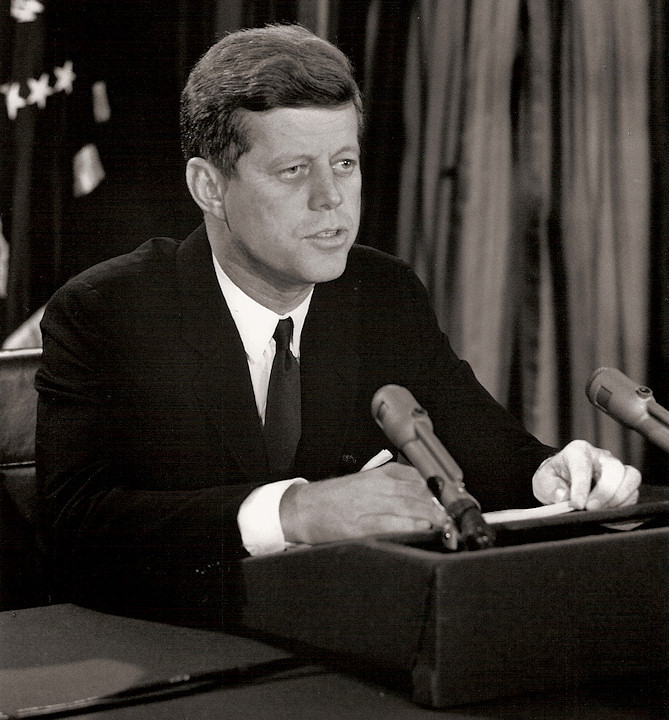
    Kennedy’s televised address to the nation on October 22nd played a critical role in shaping public perception.³ In stark and steady language, he explained the threat and articulated his administration’s response as both decisive and measured. Millions of Americans who had previously questioned his strength now saw a president willing to confront danger without succumbing to panic. His approval ratings surged.

    Compromise and the Politics of Victory

    The crisis ended through a negotiated compromise. Soviet missiles were withdrawn from Cuba, and the United States privately agreed to remove its Jupiter missiles from Turkey while pledging not to invade Cuba.⁴ That secrecy mattered. To the public, Kennedy appeared to have forced a unilateral Soviet retreat. He became a symbol of American resolve.

    In truth, the outcome was more ambiguous. However, ambiguity served the political interests of President Kennedy. At a moment when Americans were terrified of nuclear war, what mattered was not the precise balance of concessions but the perception of presidential mastery. President Kennedy’s blend of firmness and restraint created the image of a leader who had guided the nation through its most dangerous Cold War moment without sacrificing principle or peace.

    The Crisis and the Transformation of Public Trust

    In the months that followed, Kennedy’s public image underwent a transformation. Contrasting sharply with the doubts that followed the Bay of Pigs, the missile crisis framed him as a sophisticated strategist capable of navigating complexities beyond public view. Surveys conducted in early 1963 showed a dramatic increase in Americans’ confidence in his judgment, particularly among groups previously skeptical of his leadership.⁵

    The crisis also reshaped broader expectations of presidential authority. Citizens saw firsthand that modern leadership required not only military capability but deliberate reflection, consultation, and restraint. Kennedy’s private willingness to compromise, paired with his public projection of steadiness, became a template, one that later presidents struggled to emulate.

    Legacy and Memory

    President Kennedy’s assassination in 1963 froze public memory at the moment when his reputation was at its height. The Cuban Missile Crisis became central to this legacy. For many Americans, it symbolized the ideal of presidential leadership: calm, balanced, and morally anchored. Scholars have since debated the accuracy of this perception, noting that political calculation and secrecy significantly influenced the resolution of the Cuban Missile Crisis. Yet, these complexities did little to diminish the enduring effect the episode had on President Kennedy’s standing following his assassination.

    The Cuban Missile Crisis ultimately demonstrated that public perceptions of leadership are forged as much in moments of danger as in moments of achievement. President Kennedy’s handling of the crisis did not solve the dilemmas of the Cold War, but it redefined his presidency by illustrating that strength could coexist with restraint. In an era marked by ideological rivalry and nuclear fear, Kennedy’s actions provided Americans with a rare sense of confidence, anchoring his place in American political memory.

    Bibliography

    Beschloss, Michael. The Crisis Years: Kennedy and Khrushchev, 1960–1963. 1991.
    Dobbs, Michael. One Minute to Midnight: Kennedy, Khrushchev, and Castro on the Brink of Nuclear War. Knopf, 2008.
    Gaddis, John Lewis. Strategies of Containment. Oxford University Press, 1982.
    Kennedy, Robert F. Thirteen Days: A Memoir of the Cuban Missile Crisis. W. W. Norton, 1969.
    Stern, Sheldon M. The Week the World Stood Still: Inside the Secret Cuban Missile Crisis. Stanford University Press, 2005.

  • The 1970s Energy Crisis and its Effects on the Limits of American Optimism

    The energy crisis of the 1970s was more than a period of economic hardship. It was a reckoning with the moral and structural limits of the American way of life that had long been in place. For decades, cheap and abundant energy had sustained American prosperity, suburban growth, and industrial dominance. When that system faltered, it revealed both an economic vulnerability and a crisis of national identity. The disruptions of the decade forced Americans to confront a sobering reality. That reality being that their postwar confidence in endless growth and consumption was unsustainable in a world of increasingly finite resources. No president faced this challenge more directly, and more painfully, than Jimmy Carter. His attempts to confront the crisis as both a practical and moral dilemma laid bare the tensions between America’s ideals of freedom and the discipline imposed by scarcity.

    The Roots of Dependence

    By the mid-1970s, the United States had become deeply dependent on imported oil, with much of it coming from politically unstable regions, namely the Middle East. The 1973 Arab oil embargo and subsequent price shocks exposed how vulnerable the nation’s economy was to global forces beyond its control. Gasoline shortages, long lines at service stations, and rising costs of living dispelled the illusion of postwar abundance. Yet the deeper crisis was psychological. Americans had grown accustomed to an economic model premised on consumption without consequence. Energy, like prosperity itself, had seemed infinite. This was an assumption long held by Americans that the 1970s decisively shattered.

    Carter’s Moral Framing of the Crisis

    When Jimmy Carter took office in 1977, he inherited both an energy problem as well as a public extremely weary of inflation, unemployment, and political disillusionment. Unlike his predecessors Nixon and Ford, Carter framed the energy crisis as more than a logistical issue of supply and demand. In his addresses to the nation, he described it as “the moral equivalent of war,” a test of whether Americans could unite in the face of shared sacrifice.¹ His proposed solutions included conservation, investment in renewable energy, and reduced dependence on foreign oil, and were rooted in both pragmatism and principle.

    Carter’s rhetoric sharply departed from the optimism of earlier decades. He argued that the crisis demanded a redefinition of freedom. Carter argued it was not the right to consume endlessly, but the responsibility to sustain the collective good. In doing so, he challenged the prevailing ethos of abundance that had defined postwar America. This moral framing was intellectually honest, but politically perilous. Many Americans, exhausted by years of economic turmoil, did not want to hear that their habits and expectations were the problem.

    The “Crisis of Confidence” and Public Backlash

    Carter’s 1979 “Crisis of Confidence” speech epitomized this tension. Rather than offering reassurance, he told the nation that its troubles stemmed from a spiritual erosion, a loss of purpose, and shared values.³ The address was remarkable in its candor, diagnosing the energy crisis as a symptom of a deeper cultural malaise. Initially, the speech was well received. Millions of Americans praised Carter’s honesty and moral seriousness. However, goodwill quickly evaporated as shortages continued and inflation persisted. The president’s message, however accurate, came to symbolize defeatism.

    The backlash revealed the limits of moral persuasion in a consumer democracy. Carter had asked Americans to confront the contradictions of their prosperity. He asked the citizens to accept economical restraint as a patriotic duty. Yet, the prevailing political mood of the late 1970s demanded optimism, not austerity. His call for sacrifice clashed with a society increasingly skeptical of government authority and nostalgia for a simpler narrative of national greatness that had been espoused by multiple American presidents preceding Carter. Historian Meg Jacobs noted that Carter’s realism about limits collided with a culture that still believed in boundless possibility.⁴

    The Ideological Consequences

    The energy crisis thus became a crucible for the broader ideological shift that defined the end of the 1970s. Carter’s appeals to discipline and conservation represented one vision of the American future, being pragmatic, interdependent, and environmentally conscious. The rise of Ronald Reagan’s conservatism represented another, which can be characterized as restorative, market-driven, and defiantly optimistic. Reagan dismissed Carter’s warnings about scarcity, declaring that “there are no such things as limits to growth, because there are no limits on the human capacity for intelligence, imagination, and wonder.”⁵ The public’s embrace of that message reflected the fatigue associated with the energy crisis, and more importantly, a reassertion of the nation’s self-image.

    In this sense, the energy crisis did not simply reshape policy. It redefined the boundaries of political possibility. Carter’s defeat in 1980 symbolized the rejection of a politics of limits and the return to a politics of confidence. Yet his warnings about dependence, waste, and sustainability have echoed through subsequent decades of climate and energy debates. The crisis revealed an enduring contradiction in American life: the tension between material abundance and moral restraint, between optimism and realism.

    The Unfinished Reckoning

    The energy crisis of the 1970s was a mirror held up to the nation’s soul. It revealed the fragility of the economic order that had underwritten postwar prosperity and tested whether Americans could adapt to a world defined by interdependence and limitation. Jimmy Carter’s response, which was earnest, principled, and politically costly, reflected an attempt to confront that reality honestly. His failure was not merely personal or partisan but symptomatic of a society unwilling to accept that its greatest strength, being optimism, could also be its blind spot.

    In the end, the energy crisis was less about oil than about identity. It forced the United States to ask whether its promise of freedom could survive in an age of scarcity. That question, unresolved in the 1970s, remains central even today.

    1. Carter, Jimmy. “Address to the Nation on Energy.” April 18, 1977.
    2. Schlesinger, James. Energy in the American Economy, 1850–1975. Johns Hopkins University Press, 1981.
    3. Carter, Jimmy. “Address to the Nation on Energy and National Goals (‘Crisis of Confidence’).” July 15, 1979.
    4. Jacobs, Meg. Panic at the Pump: The Energy Crisis and the Transformation of American Politics in the 1970s. Hill and Wang, 2016.
    5. Reagan, Ronald. “Remarks at Convocation Ceremonies at the University of South Carolina in Columbia.” September 1983.
  • The Politics of Economic Paralysis: Stagflation and Presidential Leadership in the 1970s

    The economic crisis of the 1970s marked a profound rupture in the American political imagination. The simultaneous rise of unemployment and inflation, so-called stagflation, defied the assumptions that had guided U.S. economic policy since the New Deal era. For decades, it had been taken as a matter of orthodoxy that inflation and unemployment moved in opposite directions, and that the federal government could intervene to correct imbalances. Yet, as prices soared and growth stalled, that consensus crumbled. What followed was a decade of economic experimentation, political miscalculation, and public frustration. Presidents Richard Nixon, Gerald Ford, and Jimmy Carter each attempted to manage the crisis, but none succeeded in resolving it. Instead, their uneven responses reflected deeper institutional and ideological limits, revealing a government caught between economic theory and political reality, ultimately unable to deliver on its own postwar promises.

    Nixon and the Collapse of Economic Orthodoxy

    When Nixon took office in 1969, inflation was already rising, driven by spending on the Vietnam War, wage pressures, and loose monetary policy. Nixon initially embraced traditional fiscal restraint, but by 1971, he changed course dramatically. In a bold move, he imposed a 90-day freeze on wages and prices, followed by longer-term controls across much of the economy.¹ At the same time, he ended the Bretton Woods system by taking the U.S. off the gold standard, a decision that allowed the dollar to float and contributed to inflationary pressures globally.

    These moves were politically astute, but economically contradictory. Nixon’s policies temporarily curtailed inflation, but ignored the structural roots of the problem, particularly the increasing reliance on foreign oil by America and the rising cost of imported goods. They also subordinated economic integrity to political timing, which was partly designed to ensure favorable conditions for Nixon’s 1972 re-election campaign.² Rather than provide a lasting framework for economic stabilization, Nixon’s actions to control the economy had distorted market signals and ultimately sowed further uncertainty. The president’s dramatic interventionism illustrated the growing anxiety inside the White House. Economic stability could no longer be taken for granted, and political authority alone was insufficient to guarantee it.

    Ford and the Struggle to “Whip Inflation Now”

    When Ford assumed office in 1974 in the shadow of Watergate, he inherited not only a damaged presidency but a faltering economy. Stagflation was deepening. Unemployment had climbed above 7%, and inflation was in double digits.³ Ford’s signature response was the “Whip Inflation Now” (WIN) campaign, a public relations initiative that called on Americans to voluntarily reduce consumption, save energy, and accept wage restraint.

    WIN was widely derided as unserious, and its symbolic gestures (buttons, slogans, personal austerity) only reinforced the perception that the federal government lacked a concrete plan to solve stagflation.⁴ While Ford did eventually support modest policy shifts, including tax rebates and spending cuts, his administration failed to articulate a coherent economic philosophy. Divided between Keynesian advisors who feared recession and monetarists who demanded inflation control, Ford vacillated. As a result, his presidency came to represent a moment of political paralysis, where rhetorical appeals to personal responsibility substituted for systemic action. Ford’s tenure revealed the limits of voluntarism in an era of economic dislocation, and the deepening crisis of faith in Washington’s capacity to manage modern capitalism.

    Carter and the Crisis of Confidence

    Carter entered the presidency in 1977 with promises of reform, competence, and renewed moral leadership. Yet his administration was quickly engulfed by the worsening effects of stagflation. The 1979 oil crisis, triggered by the Iranian Revolution, sent fuel prices soaring, and inflation reached 13% by the end of the decade.⁵ Carter’s policy response was complex and, at times, contradictory. On one hand, he advocated for energy conservation, deregulation, and a transition away from oil dependence. On the other hand, his monetary policy remained largely accommodative until late in his term, when he appointed Paul Volcker as Chairman of the Federal Reserve. Volcker’s commitment to aggressive interest rate hikes would ultimately break inflation. However, that was only truly realized after Carter had lost the presidential re-election.⁶

    Perhaps more than his predecessors, Carter understood that stagflation was not just a technical problem, but a political and cultural one. In his 1979 “Crisis of Confidence” speech, he diagnosed a national malaise, arguing that Americans had become disillusioned not only with government, but with the values of consumerism and materialism.⁷ While the speech was intellectually honest, it was politically disastrous. Voters did not want to hear that the solution to their pain and economic struggles was moral clarity. They wanted results. Carter’s failure lay not in the absence of ideas, but in the mismatch between diagnosis and action. His inability to reconcile long-term structural reform with immediate economic relief rendered his presidency vulnerable, both to internal dissent and to the rising appeal of Reaganite conservatism.

    The Erosion of Economic Authority

    Together, the economic policies of Nixon, Ford, and Carter reflected a broader crisis in postwar governance. The federal government, once confident in its ability to engineer prosperity, now appeared reactive, confused, and increasingly out of touch. Stagflation was not simply an economic condition. It was a political trauma. It exposed the fragility of consensus liberalism and the hollowness of faith in expert management. The institutions that had seemed capable of solving any problem after World War II (the presidency, the Federal Reserve, the administrative state) now appeared indecisive and difficult to place trust in.

    The failure to resolve stagflation also reshaped the ideological landscape. Keynesianism, once dominant, came under sustained attack. In its place emerged a new political economy. Supply-side theory (so-called trickle-down economics) was defined as deregulation, tax cuts, and tight monetary control. These ideas, championed by Ronald Reagan, were in many ways a reaction against the perceived failures of the 1970s. The crisis of the decade thus paved the way for the conservative realignment of the 1980s, redefining the boundaries of acceptable economic policy for decades to come.

    Conclusion: Stagflation as a Turning Point

    The American response to stagflation in the 1970s was not just a series of failed economic policies. It was a reckoning with the limits of state power and public trust. Nixon, Ford, and Carter each confronted the crisis in different ways, but none could overcome the fundamental contradiction of the era. A demand for prosperity without inflation, growth without sacrifice. Their failures revealed a nation caught between political habit and economic transformation, unwilling to abandon the assumptions of the past, and simultaneously unprepared for the realities of the present.

    Like the Vietnam War and Watergate, stagflation forced Americans to confront uncomfortable truths about their institutions they had placed their faith in. It exposed the gap between leadership and results and between rhetoric and reality. In doing so, it helped redefine what citizens expected from their government and what they no longer believed it could deliver.

    Bibliography

    1. Nixon, Richard. Public Papers of the Presidents, 1969.
    2. Stein, Herbert. Presidential Economics: The Making of Economic Policy from Roosevelt to Clinton. AEI Press, 1994.
    3. Bureau of Labor Statistics. “Historical Unemployment Data,” 1970–1980.
    4. Cannon, James. Time and Chance: Gerald Ford’s Appointment with History. University of Michigan Press, 1994.
    5. U.S. Energy Information Administration. “Oil Price History and Analysis.”
    6. Volcker, Paul, and Toyoo Gyohten. Changing Fortunes: The World’s Money and the Threat to American Leadership. Times Books, 1992.
    7. Carter, Jimmy. “Crisis of Confidence” Speech, July 15, 1979. The American Presidency Project.
  • Escalation and Exit: The United States and the Vietnam War

    The Vietnam War was one of the most turbulent chapters in American foreign policy, defined by gradual entanglement, mounting costs, and a contested withdrawal. The escalation of U.S. involvement from advisory support in the 1950s to full-scale military engagement in the 1960s did not occur through a single decision but through a series of incremental commitments shaped by Cold War anxieties, political calculations, and flawed assumptions. By the time the policy of Vietnamization was enacted under President Richard Nixon in 1969, the United States had become deeply embedded in a war it could neither decisively win nor politically sustain. The path to Vietnamization reveals the interplay between ideology, misjudgment, and the limits of American power.

    The Origins of Involvement

    The roots of U.S. involvement in Vietnam lie in the broader strategy of Cold War containment. Following the defeat of French colonial forces at Dien Bien Phu in 1954, the Geneva Accords divided Vietnam into the communist North and the so-called democratic South. The United States, committed to halting the spread of communism in Southeast Asia, supported the establishment of the Republic of Vietnam under Ngo Dinh Diem. American aid, advisors, and diplomatic backing quickly flowed into the region.¹

    Diem’s regime, however, was authoritarian and unpopular, relying heavily on American support to suppress dissent and maintain control. The Eisenhower and Kennedy administrations framed this alliance as necessary to prevent a “domino effect” in Asia, where the fall of South Vietnam would allegedly trigger a cascade of communist victories across the region, resulting in a communist stronghold in the East that America could never topple.² As a result, what began as limited support evolved into a moral and geopolitical obligation. By the early 1960s, the U.S. had committed over 15,000 military advisors. The groundwork for escalation was firmly in place.

    The Turning Point: Johnson and the Logic of Escalation

    President Lyndon B. Johnson inherited a deteriorating situation upon taking office in 1963, following John F. Kennedy’s assassination. Diem had been assassinated with tacit U.S. approval, and South Vietnam’s political instability deepened. In August of 1964, the Gulf of Tonkin incident, in which U.S. ships were allegedly attacked by North Vietnamese forces, provided Johnson with justification to seek congressional approval for broader military action. The Gulf of Tonkin Resolution granted him expansive authority to conduct military operations without a formal declaration of war.³

    This moment marked a critical shift. Under President Johnson, the U.S. launched Operation Rolling Thunder in 1965, a sustained bombing campaign against North Vietnam, and began deploying combat troops en masse. By the end of 1965, over 180,000 American soldiers were in Vietnam.⁴ Despite assurances that victory was near, the war quickly devolved into a brutal and protracted conflict. The North Vietnamese and Viet Cong, utilizing guerrilla tactics and extensive knowledge of the terrain, proved far more resilient than American planners anticipated.

    Attrition and the Limits of Power

    The strategy of attrition, aimed at wearing down enemy forces through superior firepower, failed to produce clear results. Body counts replaced territorial gains as a measure of success, and public skepticism began to mount. The Tet Offensive in January of 1968, a massive and coordinated assault by North Vietnamese and Viet Cong forces, struck key urban centers across South Vietnam, including the U.S. embassy in Saigon. Though a tactical failure for the communists, Tet shattered the perception that the U.S. was winning the war.⁵

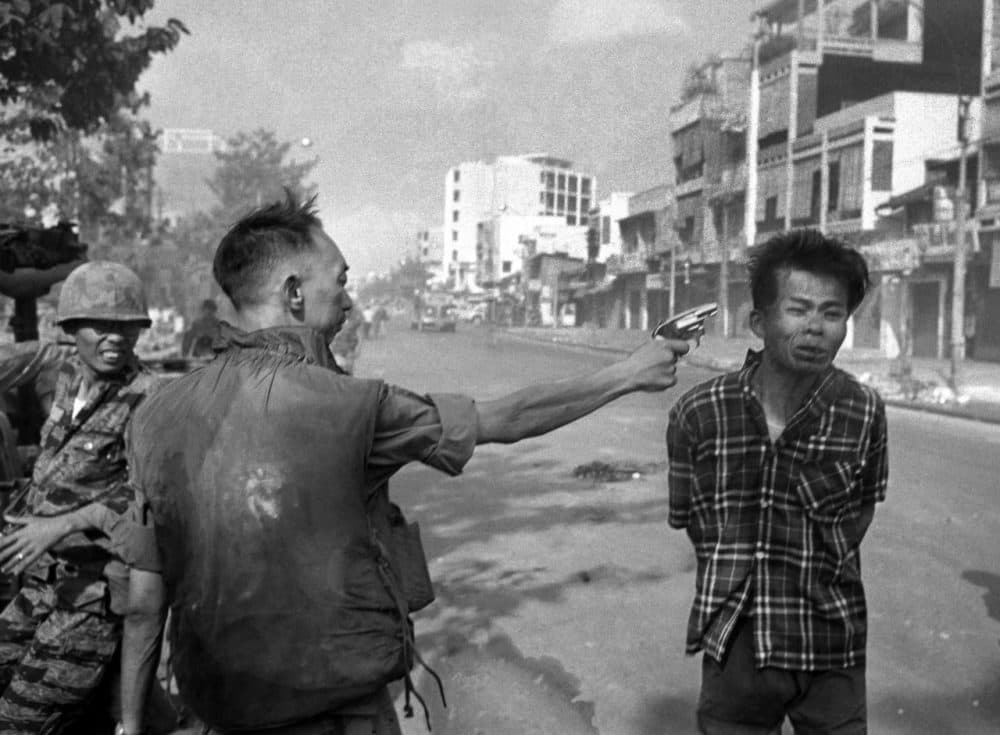
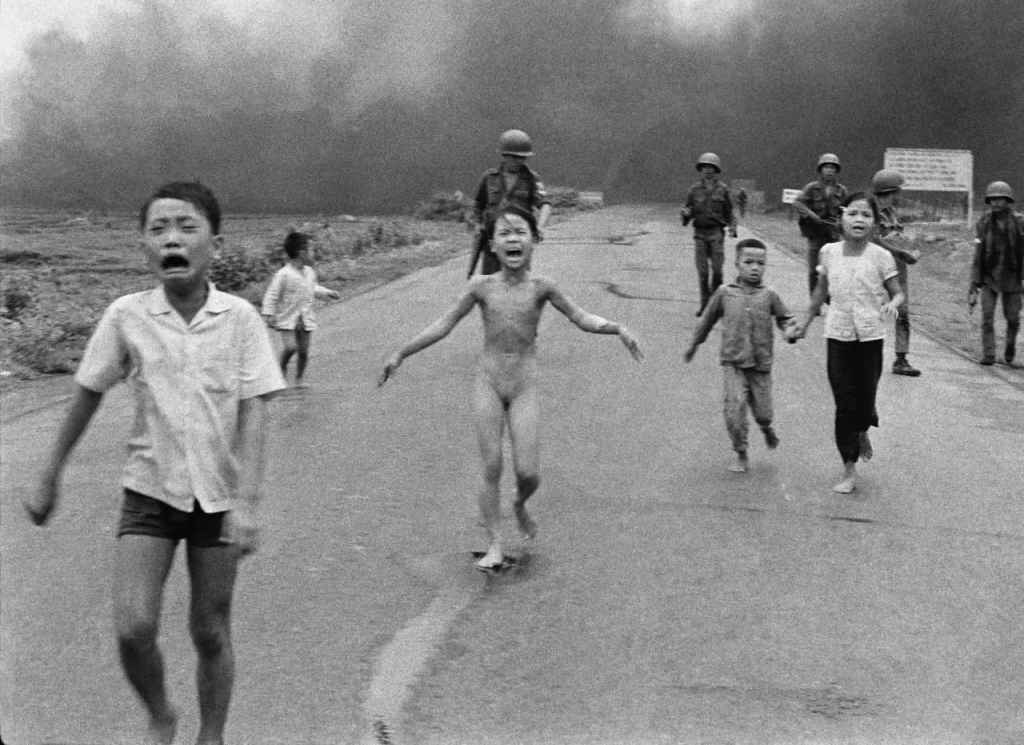
    Televised images of combat, growing casualties, and reports of atrocities like the My Lai Massacre further eroded domestic support. Journalists and returning soldiers increasingly challenged the official narrative, contributing to what scholars termed the “credibility gap” between government statements and the reality on the ground.⁶ Public protests swelled, and President Johnson, recognizing the political toll, announced in March of 1968 that he would neither seek re-election or accept his party’s nomination.

    Nixon and Vietnamization: Shifting the Burden

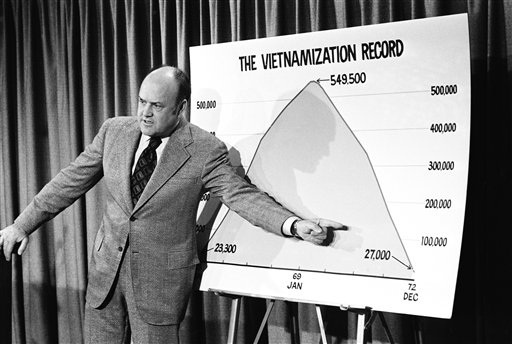
    When Richard Nixon assumed the presidency in 1969, he faced a nation weary of war but wary of defeat. His administration introduced Vietnamization, a policy aimed at gradually reducing American troop levels while increasing the South Vietnamese military capacity (ARVN). The goal was to transfer responsibility for the war to the South Vietnamese, allowing for a so-called “peace with honor” withdrawal of U.S. forces.⁷

    Vietnamization was not an immediate retreat but a strategic recalibration. U.S. troop numbers began to decline, from a peak of 543,000 in 1969 to around 69,000 by 1972, but the war itself expanded into neighboring countries like Cambodia and Laos in an effort to disrupt North Vietnamese supply lines.⁸ These incursions sparked further domestic outrage, culminating in tragic events such as the Kent State shootings in May of 1970.

    Despite ongoing peace talks in Paris, it became increasingly clear that the South Vietnamese government lacked the legitimacy and capability to survive without American support. Nonetheless, Nixon pressed ahead with disengagement, culminating in the Paris Peace Accords of January of 1973. American forces withdrew, though official fighting between North and South Vietnam continued until the fall of Saigon in 1975.

    The Legacy of Escalation

    The escalation of the Vietnam War revealed the perils of incremental commitment without clear objectives or public consensus. Each administration, unwilling to appear weak, deepened American involvement in the hopes of avoiding defeat, only to entrench the country further in an unwinnable conflict. The pivot to Vietnamization acknowledged these limits, but did not erase the war’s human, political, and moral costs.

    Long-term consequences included a profound shift in American foreign policy thinking. The War Powers Resolution of 1973 sought to reassert congressional authority over military engagements.⁹ Public trust in government, already shaken by the war, was further eroded by related scandals like Watergate and economic instability caused by “stagflation”. The so-called “Vietnam Syndrome”, a reluctance to engage in foreign interventions, shaped U.S. strategy for decades.

    In the end, the path from escalation to Vietnamization underscores a central lesson of modern American history. Military power cannot substitute for political legitimacy, and public support is not an afterthought. It is a requirement. The Vietnam War became not just a battlefield conflict, but a national reckoning with the limits of American influence and the costs of hubris.


    Bibliography

    1. Logevall, Fredrik. Choosing War: The Lost Chance for Peace and the Escalation of War in Vietnam. University of California Press, 1999.
    2. Gaddis, John Lewis. Strategies of Containment. Oxford University Press, 1982.
    3. U.S. Congress. Gulf of Tonkin Resolution, August 1964.
    4. McNamara, Robert S. In Retrospect: The Tragedy and Lessons of Vietnam. Vintage Books, 1995.
    5. Hallin, Daniel. The “Uncensored War”: The Media and Vietnam. Oxford University Press, 1986.
    6. Appy, Christian G. Working-Class War: American Combat Soldiers and Vietnam. University of North Carolina Press, 1993.
    7. Nixon, Richard. “Vietnamization.” Speech to the Nation, November 3, 1969.
    8. Karnow, Stanley. Vietnam: A History. Viking, 1983.
    9. U.S. Congress. War Powers Resolution, 1973.
  • The National Organization for Women in Feminist Reform

    The emergence of the National Organization for Women (NOW) in 1966 marked a turning point in the modern women’s rights movement. NOW was not just another advocacy group. They represented a deliberate attempt to institutionalize feminist demands within the American political system. It translated widespread frustration into coordinated action, channeling the energy of second-wave feminism into a sustained campaign for systemic reform. In doing so, NOW helped shift the women’s rights movement from diffuse activism into a national force capable of legal, cultural, and political transformation.

    Before the founding of NOW, the struggle for gender equality was largely decentralized. Though women had gained the right to vote in 1920, they remained marginalized in the political process and excluded from many economic and educational opportunities. The social conservatism of the postwar era reinforced traditional gender roles, particularly for white, middle-class women. Yet by the early 1960s, that stability was unraveling. Women entered the workforce in increasing numbers, gained access to higher education, and grew dissatisfied with the limitations of domestic life.¹ Betty Friedan’s The Feminine Mystique (1963) articulated this discontent, sparking a collective awareness that laid the groundwork for organized resistance.²

    NOW emerged from this moment of awakening with a clear purpose which was to achieve full equality for women through legal and institutional means. Its founding statement declared a commitment to “bring women into full participation in the mainstream of American society.”³ In contrast to more radical feminist groups that sought revolutionary change outside the system, NOW focused on reforming the system from within. This pragmatic approach broadened the appeal of the movement, allowing it to influence legislation, litigation, and public discourse.

    NOW in the Political and Cultural Arena

    NOW’s early victories were anchored in its legal and policy agenda. One of its initial priorities was ensuring the enforcement of Title VII of the Civil Rights Act of 1964, which prohibited sex discrimination in employment. Though the law had been passed, the Equal Employment Opportunity Commission (EEOC) was reluctant to act on gender-based claims due to a combination of factors, including legal interpretation, political pressures, and changes in the agency’s leadership. NOW directly challenged this idleness, pressuring the EEOC to recognize sexual discrimination as a legitimate legal issue.⁴ This advocacy helped transform Title VII from a symbolic gesture into a usable tool for working women across the country.

    NOW also played a central role in the passage and implementation of Title IX in 1972, which mandated gender equality in education. The organization lobbied Congress, submitted amicus briefs, and mobilized its membership to advocate for the law’s enforcement.⁵ Title IX became a cornerstone of educational equity, especially in expanding opportunities for women in higher education and athletics. While the effects were not immediate, they were profound, reshaping the academic landscape for generations of women.

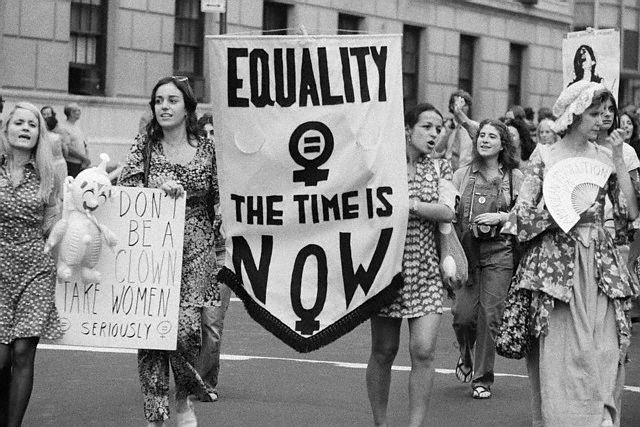
    In the broader cultural arena, NOW’s influence was equally significant. Through public campaigns, legal action, and grassroots organizing, NOW challenged widespread gender stereotypes and elevated feminist discourse. Its members staged protests, published newsletters, and appeared in the media, framing feminism not as a fringe ideology but as a legitimate civic movement.⁶ This visibility helped normalize feminist perspectives, even as it provoked backlash from conservative critics, both male and female. While groups like the Women’s Liberation Movement pushed the cultural boundaries of feminism, NOW provided a structured platform that brought feminist issues into the legislative and policy mainstream.

    One of the organization’s most ambitious, yet ultimately unsuccessful, efforts was the campaign to ratify the Equal Rights Amendment (ERA). After Congress passed the ERA in 1972, NOW spearheaded a nationwide push for state-level ratification. The campaign initially gained momentum, but opposition, particularly from conservative activists like Phyllis Schlafly, stalled progress.⁷ Despite intense lobbying and public demonstrations, the amendment fell short of the necessary number of ratifying states by the 1982 deadline. While the ERA campaign failed legislatively, it galvanized a generation of feminists and further cemented NOW’s role as the institutional face of the movement.

    The structure and strategy of NOW also shaped the character of feminist engagement. Unlike smaller, ideologically rigid groups that remain decentralized, NOW functioned as a membership-based organization with regional chapters and a formal leadership hierarchy. This structure allowed it to coordinate large-scale campaigns and engage in policy advocacy, but it also created tensions around inclusivity and representation. Critics, particularly women of color and working-class women, argued that NOW’s agenda reflected the concerns of white, middle-class professionals and not theirs.⁸ This critique exposed a fault line within the movement between those seeking broad-based structural reform and those demanding intersectional analysis and representation.

    Nevertheless, the legacy of NOW’s approach to feminist advocacy remains profound. Its ability to translate grassroots activism into institutional pressure marked a new stage in the women’s rights movement. By operating within the frameworks of law, policy, and media, NOW helped transform feminist aspirations into concrete social and legal changes. It legitimized feminist demands in the eyes of mainstream institutions while maintaining pressure on those institutions to change.

    Long-Term Consequences for Gender Equality

    The long-term impact of NOW’s work is evident in numerous dimensions of American life. Workplace protections, anti-discrimination laws, reproductive rights, and educational access all bear the imprint of NOW’s sustained efforts. In legal precedent, public awareness, and institutional policy, the organization helped establish gender equality as a fundamental national principle. Yet it also revealed the challenges of reform, such as the limits of legal change, the persistence of cultural resistance, and the complexity of coalition-building in a diverse movement.

    The organization’s model, pragmatic, persistent, and policy-driven, offered a blueprint for future advocacy. While newer feminist movements have adapted different methods and priorities, many continue to rely on the infrastructure that NOW helped build. From litigation strategies to public messaging campaigns, the tools of modern feminist activism owe much to the groundwork laid in the 1960s and 1970s.

    The Enduring Significance of Institutional Feminism

    In my final analysis, the National Organization for Women played a critical role in shifting the women’s rights movement from a series of disparate grievances to a cohesive and influential political force. Its efforts helped redefine citizenship, labor, and education in gender-inclusive terms. More than a lobbying group or a protest movement, NOW served as a bridge between radical critique and institutional reform. That tension between idealism and pragmatism continues to define feminist politics to this day, over 50 years later.

    While critiques of its inclusivity remain valid, the legacy of NOW’s work is undeniable. It advanced the conversation around gender equity and demonstrated that sustained, organized pressure can yield structural change. Like many of its contemporary movements, such as civil and gay rights, NOW transformed how Americans understood justice, not as a private concern, but as a public imperative.

    Bibliography

    1. Chafe, William H. The Paradox of Change: American Women in the 20th Century. Oxford University Press, 1991.
    2. Friedan, Betty. The Feminine Mystique. W.W. Norton, 1963.
    3. National Organization for Women. “Statement of Purpose,” 1966.
    4. Freeman, Jo. The Politics of Women’s Liberation. David McKay Company, 1975.
    5. U.S. Department of Education. Title IX and Sex Discrimination.
    6. Rosen, Ruth. The World Split Open: How the Modern Women’s Movement Changed America. Penguin, 2000.
    7. Mansbridge, Jane. Why We Lost the ERA. University of Chicago Press, 1986.
    8. Hooks, Bell. Ain’t I a Woman: Black Women and Feminism. South End Press, 1981.
  • Richard Nixon, the Watergate Scandal, and the Erosion of Public Trust

    By Deon Nguyen

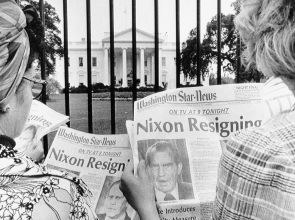
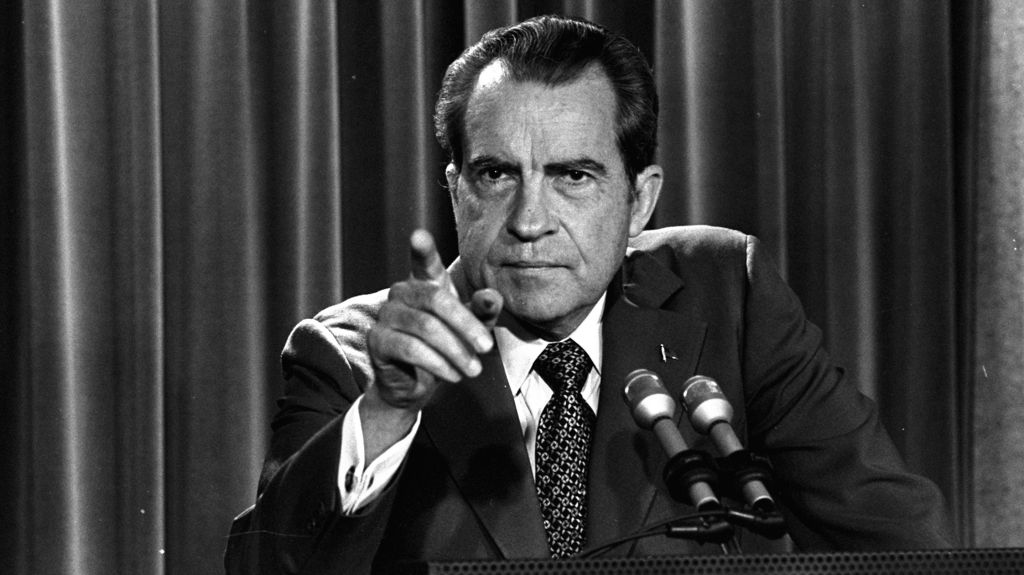
    The Watergate scandal represents a pivotal moment in American political history. More than the exposure of presidential misconduct, it marked a profound rupture in public confidence. Richard Nixon’s central role in the events surrounding Watergate deeply undermined the legitimacy of federal institutions. In the aftermath, the average American citizen viewed the federal government not as a guardian of democratic values, but as a site of deception and abuse of power.

    Prior to Watergate, many Americans held a largely deferential view of the presidency. Despite the social upheaval of the 1960s, the executive office remained a symbol of national stability. Presidents were seen as public servants, fundamentally aligned with the public good. Their authority, even when questioned, was largely respected. Watergate, however, brought to light the extent to which that image could be deliberately manipulated.¹ It exposed the machinery of political power in previously unthinkable ways for the average citizen. The scandal shattered illusions about executive virtue and permanently altered how Americans relate to their leaders.

    The revelation that operatives connected to Nixon’s Committee to Re-Elect the President (so-called CREEP) had orchestrated the break-in at the Democratic National Committee headquarters ignited suspicion. Initially dismissed by some as a minor incident, the event quickly escalated in gravity as investigative journalists, most notably Bob Woodward and Carl Bernstein of The Washington Post, began to uncover a pattern of deceit and obstruction. As congressional committees launched formal investigations, more disturbing facts emerged: hush money payments, misuse of government agencies like the FBI and CIA, and attempts to interfere with legal proceedings.²

    The Nixon administration’s persistent denials, later proven false, were perceived as intentional efforts to deceive the American people. This perceived betrayal triggered a marked deterioration in civic faith. Citizens who had previously trusted the president as a man of his word found themselves watching in disbelief as lie after lie unraveled. Public trust, once rooted in patriotic loyalty, was now consumed by skepticism and doubt. The feeling of betrayal was especially potent because it came from the highest office in the land, and its implications went far beyond Nixon as an individual.

    The Presidency and the Crisis of Credibility

    A central turning point in public perception occurred with the release of the White House tapes. These secret recordings, made by Nixon himself, provided irrefutable evidence of his complicity in the cover-up. The so-called “smoking gun” tape, released in August 1974, demonstrated that he had sought to impede the FBI’s investigation into the break-in.³ For many Americans, this was an unambiguous confirmation of executive dishonesty and abuse of power.

    The impact on public opinion was immediate and severe. Surveys conducted in 1974 documented a sharp decline in confidence in the presidency and Congress.⁴ According to data from the Pew Research Center, trust in government plummeted from 68% in 1968 to 36% by the end of 1974. The televised Senate hearings further exposed the inner workings of a corrupt administration.⁴ Millions of Americans tuned in daily, watching as former White House staffers detailed illegal activities and systemic corruption. Citizens who watched these proceedings began questioning not only Nixon but also the broader system that enabled such misconduct.

    The scandal’s effect was magnified by its visibility. Unlike past political controversies, Watergate unfolded in the national spotlight. Media coverage was relentless, and Americans witnessed government officials admit to deception under oath. This transparency paradoxically deepened distrust. Rather than restore faith in the system by showcasing accountability, it revealed the full extent of institutional vulnerability.⁵ The public began to ask hard questions: If Nixon could get away with this for so long, what else had been hidden? What other lies had gone unchallenged?

    Long-Term Consequences for Civic Engagement

    The psychological impact of Watergate extended far beyond Nixon’s resignation. It contributed to the emergence of a more cynical and disengaged electorate. Voter turnout in the years following the scandal declined, and political apathy began to rise. No longer was political participation seen as a route to national progress. For many citizens, it represented a futile engagement with a corrupt system.⁶ Political campaigns increasingly emphasized image management and damage control, further alienating voters from substantive discourse.

    The scandal also catalyzed a transformation in journalistic norms. Reporters increasingly assumed an adversarial posture toward public officials. The era of “access journalism” gave way to investigative journalism, driven by a duty to expose wrongdoing. While this empowered the press to hold leaders accountable, it also fostered a climate of suspicion.⁷ Citizens learned to view political narratives with skepticism, often defaulting to disbelief. This wariness, while a safeguard against blind loyalty, also made it harder to build consensus or sustain optimism about the government’s ability to function effectively.

    Legislative reforms in the wake of Watergate sought to restore public confidence. The Federal Election Campaign Act Amendments of 1974 introduced new transparency requirements, limited campaign contributions, and established the Federal Election Commission.⁸ These efforts aimed to curtail the influence of money in politics and prevent future abuses. While they marked a significant step toward accountability, they did not substantially reverse the erosion of trust. The symbolic weight of Nixon’s misconduct continued to cast a long shadow over American politics, mainly as new scandals emerged in subsequent decades.

    The Enduring Legacy of Disillusionment

    In the final analysis, Nixon’s role in the Watergate scandal irrevocably altered the public’s relationship with government. The executive branch, once imbued with a sense of patriotic reverence, became a source of apprehension and skepticism. This shift marked the beginning of a more adversarial civic ethos in the United States. The presidency was no longer viewed as a moral authority but a politically self-interested institution.⁹ The myth of presidential infallibility was shattered, replaced by a more complex, and often darker, understanding of political power.

    Even decades later, Watergate remains a cultural touchstone for political corruption. The suffix “-gate” has been applied to numerous subsequent scandals, like “Irangate”, reflecting its lasting linguistic and psychological impact. It is a shorthand for government betrayal and serves as a benchmark against which all other scandals are measured. The scandal fundamentally reoriented public expectations of federal transparency and accountability. For the average American citizen, trust in government has never fully recovered from Nixon’s betrayal.

    In conclusion, Watergate taught the nation an indelible lesson: democratic institutions are only as trustworthy as the individuals who run them. While mechanisms of accountability remain in place, the events of the early 1970s continue to echo through American political life. They serve as a sobering reminder that power must always be checked, and that public trust, once lost, is exceedingly difficult to regain.

    Bibliography
    1. Schudson, Michael. Watergate in American Memory: How We Remember, Forget, and Reconstruct the Past. Basic Books, 1992.
    2. U.S. Senate Watergate Committee Hearings, 1973. Congressional Record.
    3. United States v. Nixon, 418 U.S. 683 (1974).
    4. Pew Research Center. “Public Trust in Government: 1958–2023.”
    5. Woodward, Bob, and Carl Bernstein. All the President’s Men. Simon & Schuster, 1974.
    6. Broder, David S. “Watergate’s Impact on Public Opinion.” The Washington Post, August 9, 1974.
    7. Kalb, Marvin, and Stephen Hess. The Media and the War on Terrorism. Brookings Institution Press, 2003.
    8. Kutler, Stanley I. The Wars of Watergate. Knopf, 1990.
    9. Ambrose, Stephen E. Nixon: Ruin and Recovery, 1973–1990. Simon & Schuster, 1991.