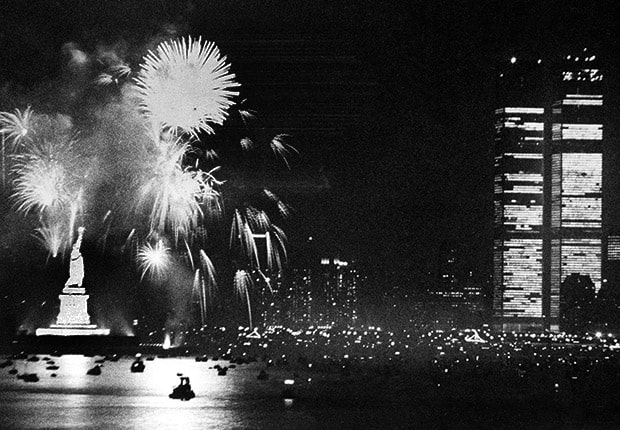
The American Bicentennial in 1976 was intended to be a celebration of national triumph, commemorating two hundred years since the signing of the United States Declaration of Independence. Across the country, parades, festivals, historical reenactments, and patriotic displays sought to rekindle a shared sense of pride in the American experiment. Yet, beneath the fireworks and festivities lay a nation burdened by political disillusionment, economic uncertainty, and social division. Rather than signaling the return of unquestioned patriotism, the Bicentennial reflected a country searching for reassurance after one of the most turbulent decades in its history. The celebration became less a declaration of national confidence than an attempt to restore it, revealing the profound disconnect between America’s founding ideals and the realities confronting its citizens during the mid-1970s.
A Nation Recovering from Crises
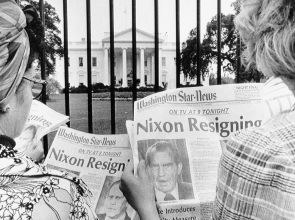
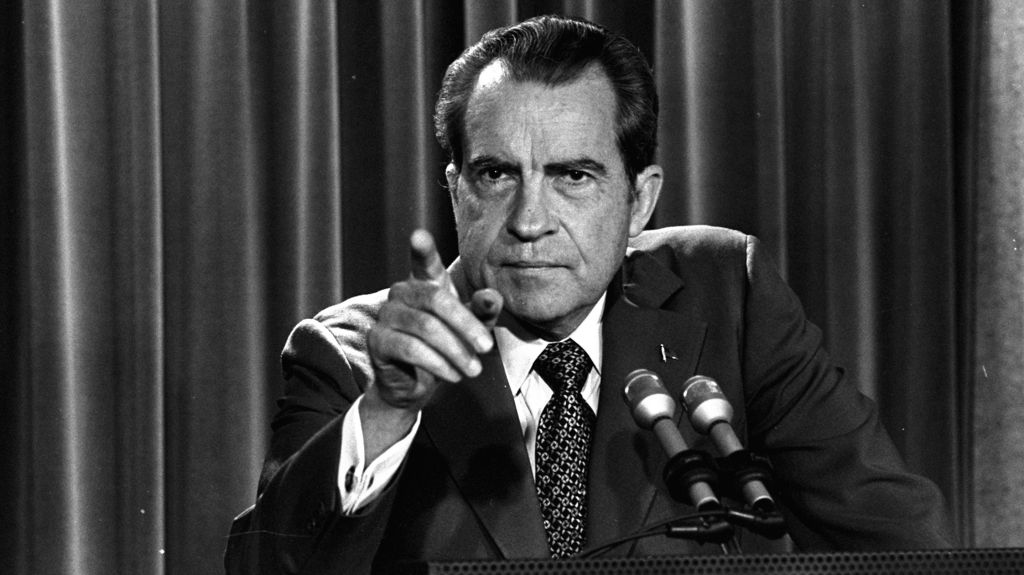
The Bicentennial occurred at a moment when Americans had little reason for celebration. The previous years had witnessed the assassination of political leaders, widespread civil unrest, the escalation and eventual failure of the Vietnam War, the Watergate scandal, and the resignation of President Richard Nixon. Public trust in government had reached historic lows as citizens questioned the integrity of political institutions that had once commanded widespread respect.¹
Economic conditions further deepened this sense of unease. Inflation remained stubbornly high while unemployment continued to rise, creating the unprecedented challenge of so-called stagflation. The energy crises of 1973 and 1974 had exposed America’s dependence on foreign oil, leading to gasoline shortages and rising living costs.² For many families, economic hardship overshadowed patriotic celebration. The optimism that had characterized the postwar decades had largely disappeared, replaced by uncertainty about the nation’s future.
Against this backdrop, the Bicentennial served as an opportunity to pause and reflect rather than simply celebrate. Americans were commemorating their nation’s birth while simultaneously questioning whether its democratic institutions remained capable of fulfilling the promises articulated two centuries earlier.
Patriotism Without Triumph
Unlike previous national anniversaries, the Bicentennial lacked a singular narrative of victory or progress. Organizers deliberately emphasized themes of participation, local history, and community engagement instead of grand displays of military strength or political achievement as had been done in other celebrations.³ Communities restored historic buildings, organized neighborhood celebrations, and encouraged citizens to examine their own local contributions to American history.
This decentralized approach reflected the political climate of the era. Following Watergate, many Americans were increasingly skeptical of centralized authority and official narratives. Instead of asking citizens to celebrate government itself, Bicentennial organizers encouraged them to celebrate the nation’s founding principles and the resilience of ordinary Americans. Patriotism became less about confidence in political leaders and more about reaffirming democratic ideals despite contemporary disappointments.
For many citizens, this distinction was significant. Americans could express pride in the nation’s history while simultaneously remaining deeply critical of its present leadership. The Bicentennial therefore illustrated an evolving understanding of patriotism. One that was rooted not in unquestioning loyalty, but in the belief that democratic institutions should continually strive to live up to their founding ideals.
Memory, Reflection, and National Identity
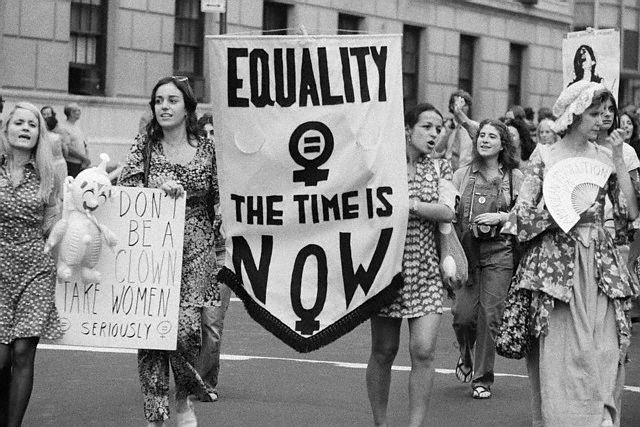
The Bicentennial also prompted Americans to reconsider whose history was being celebrated. The social movements of the 1960s and early 1970s had challenged traditional narratives that largely ignored the experiences of women, African Americans, Native Americans, and other marginalized communities. As a result, many Bicentennial programs sought to present a broader interpretation of American history than previous national commemorations had offered.⁴
This effort was not without controversy, however. Critics argued that official celebrations often romanticized the nation’s past while overlooking persistent inequalities. Others believed that emphasizing historical injustices diminished the patriotic spirit of the anniversary. These debates reflected broader cultural tensions that had emerged throughout the decade, and linger today. The Bicentennial became both a celebration of American history as well as a conversation about how that history should be remembered.
Rather than weakening national identity, these discussions demonstrated a growing willingness to critically examine the American past. Citizens increasingly viewed patriotism and historical criticism as compatible rather than contradictory. The willingness to acknowledge past shortcomings while celebrating democratic ideals represented an important evolution in public historical consciousness.
Although the Bicentennial generated widespread public participation, it did not erase the anxieties that defined the decade. Economic instability persisted, political polarization remained unresolved, and confidence in government recovered only gradually. President Gerald Ford encouraged Americans to view the anniversary as evidence of national resilience, but his appeals could not fully overcome the lingering effects of Vietnam, Watergate, and economic stagflation.⁵
Nevertheless, the Bicentennial succeeded in providing Americans with a temporary sense of shared purpose. At a time when many institutions appeared fractured, the anniversary reminded citizens that the nation’s identity extended beyond any single administration or political crisis. The celebration emphasized continuity over certainty, suggesting that American democracy had endured previous challenges and possessed the capacity to overcome new ones.
Celebrating Ideals in an Age of Doubt
The American Bicentennial reflected a nation caught between pride and uncertainty. While millions gathered to commemorate two centuries of independence, they did so against a backdrop of economic hardship, political distrust, and lingering social conflict. The celebration did not restore the optimism of earlier generations, nor did it resolve the crises confronting the country. Instead, it revealed that patriotism had become more reflective and more complicated, giving the average American important perspectives to consider about their country’s history and future.
In this final analysis, the Bicentennial demonstrated that national identity is often strengthened not during moments of unquestioned success, but during periods of collective uncertainty. Americans celebrated not because the nation had achieved perfection, but because they continued to believe that its founding ideals remained worth preserving. The anniversary became less a celebration of what the United States was than of what its citizens still hoped it could become.
Bibliography
Glassberg, David. American Historical Pageantry: The Uses of Tradition in the Early Twentieth Century. University of North Carolina Press, 1990.
Lepore, Jill Lepore. These Truths: A History of the United States. W. W. Norton, 2018.
Bodnar, John. Remaking America: Public Memory, Commemoration, and Patriotism in the Twentieth Century. Princeton University Press, 1992.
American Revolution Bicentennial Administration. Official Bicentennial Reports, 1977.
Patterson, James T. Restless Giant: The United States from Watergate to Bush v. Gore. Oxford University Press, 2005.