The Mayaguez Affair happened in the closing chapter of American involvement in Southeast Asia. In May 1975, only weeks after the fall of Saigon, the incident tested the resolve of the United States in a rapidly shifting geopolitical landscape. The event revealed the lingering anxieties of a nation emerging from the trauma of the Vietnam War. President Gerald Ford’s handling of the crisis sought to project strength and decisiveness. Yet, the outcome exposed the complexities and costs of American foreign policy in the aftermath of a deeply unpopular war.
Throughout and soon after the Vietnam War, the United States faced a crisis of credibility. The humiliating evacuation of American personnel from Saigon had signaled, to many observers, a diminished global standing. Against this backdrop, the seizure of the American merchant vessel SS Mayaguez by the Cambodian Khmer Rouge forces took on symbolic importance far beyond its immediate circumstances. The ship, sailing in international waters in the Gulf of Thailand, was intercepted and its crew detained. For the Ford administration, the incident presented both a challenge and an opportunity. It was a chance to reassert American authority after years of perceived retreat and military decline.
Prior to the Mayaguez Affair, American policymakers were acutely aware of the domestic and international pressures shaping their decisions (or least, they should have been, depending on certain viewpoints). Congress had grown increasingly wary of foreign military engagements, and public opinion remained deeply scarred by the Vietnam War. Nonetheless, the seizure of the vessel was widely interpreted as a direct affront to U.S. sovereignty. Administration officials feared that a failure to respond forcefully would reinforce perceptions of American weakness in the face of adversarial regimes. As a result, the decision-making process unfolded rapidly, with limited intelligence and considerable uncertainty regarding the crew’s location.
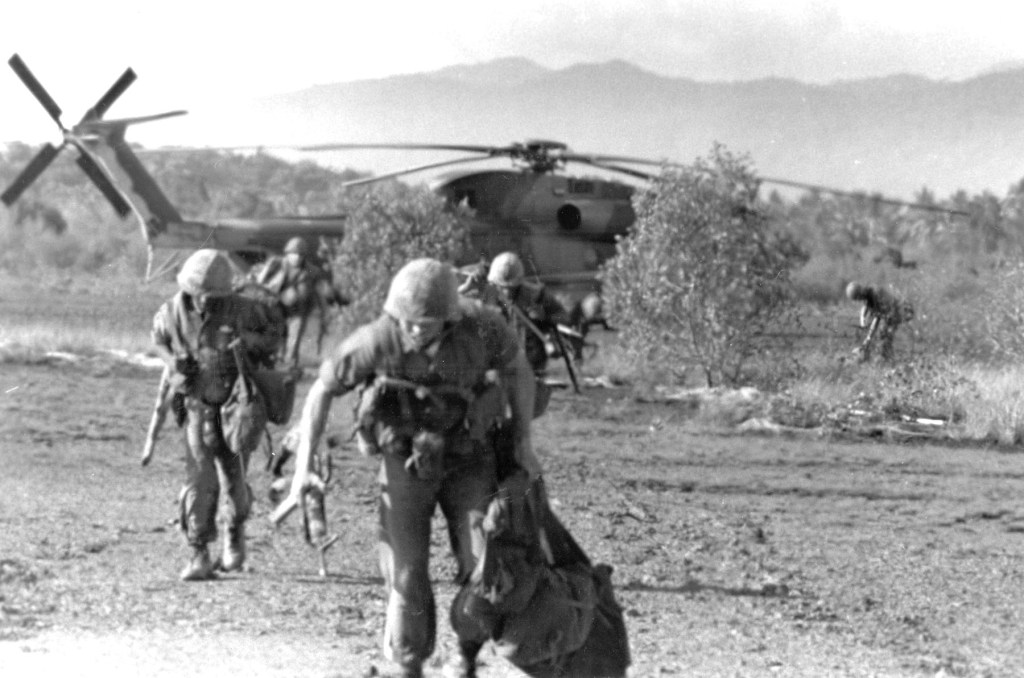
The administration’s response was swift and forceful. President Ford authorized military action, including airstrikes against Cambodian targets and a Marine assault on Koh Tang Island, where the crew was believed to be held. In reality, the crew of the Mayaguez had already been moved and were released by Khmer Rouge forces shortly after the U.S. assault began. This disconnect between intelligence and action proved costly. The battle on Koh Tang Island resulted in significant casualties with 41 American servicemen dead, many in a helicopter crash during the initial phase of the operation, and dozens more were wounded.
The Mayaguez Affair and the Projection of Power
A central dimension of the crisis was the Ford Administration’s desire to restore American credibility on the world stage. In the wake of Vietnam, policymakers were deeply concerned with what became known as the so-called “credibility gap”, which refereed to the perception that the United States lacked the will to defend its interests. The Mayaguez incident offered an opportunity to counter this narrative, despite its failure. By responding decisively, the Ford administration aimed to demonstrate that the United States remained capable of swift and effective action, even after the setbacks of the previous decades.
However, the operation’s execution revealed significant flaws. Intelligence failures played a critical role in shaping the outcome. Military planners operated under the assumption that the crew was being held on Koh Tang Island, an assessment that proved incorrect. Communication breakdowns and the urgency of the situation contributed to a lack of coordination among U.S. forces. These shortcomings underscored the challenges of conducting military operations in a region where the United States had recently disengaged and where reliable intelligence networks had largely collapsed.
Public reaction to the affair was complex. Initially, many Americans viewed the operation as a necessary assertion of national strength. The safe return of the Mayaguez crew was widely celebrated, and President Ford’s approval ratings experienced a temporary boost. Yet as details of the operation emerged, including the number of casualties and the fact that the crew had been released independently of the assault, public sentiment became more ambivalent. Critics argued that the administration had acted precipitously, prioritizing symbolic victory over careful deliberation, an approach that, in their view (and my own), exemplified the very dynamics underlying the “credibility gap”.
Long-Term Implications for U.S. Foreign Policy
The Mayaguez Affair occupies a unique place in the broader narrative of American foreign policy. Often described as the “last battle” of the Vietnam War era, it encapsulated many of the tensions that defined the period, like the desire to restore national pride, the constraints imposed by domestic opinion, and the persistent challenges of military intervention abroad. Like the entirety of the Vietnam War, the incident highlighted the limits of American power, particularly in situations where intelligence was incomplete and the political stakes were high.
In the years following the affair, policymakers continued to grapple with its implications. The operation reinforced the importance of accurate intelligence and interagency coordination, lessons that would shape future military planning. It also contributed to ongoing debates about the appropriate use of force in the post-Vietnam context. While some viewed the response as a necessary demonstration of resolve, others saw it as an example of overreach, driven by a need to compensate for past failures.
The affair also had implications for civil-military relations. The rapid decision to deploy forces, combined with the high casualty rate, raised questions about the decision-making process within the executive branch. Critics argued that the administration had not sufficiently consulted Congress, reflecting broader tensions over war powers that had intensified during the Vietnam War. These concerns would continue to influence discussions about the balance of authority between the president and the legislative branch.
The Enduring Significance of the Mayaguez Affair
In historical retrospect, the Mayaguez Affair stands as a revealing, albeit lesser known, episode in the transition from the Vietnam War to a new era of American foreign policy. It demonstrated both the persistence of Cold War dynamics and the evolving constraints on American military action. The incident underscored the difficulty of reconciling the desire for decisive leadership with the realities of limited information and domestic skepticism.
The legacy of the affair is marked by its ambiguity. On one hand, it reaffirmed the United States’ willingness to defend its interests and protect its citizens. On the other hand, it exposed the costs of hastily acting on imperfect intelligence and the risks of allowing symbolic considerations to drive military decisions. For many Americans, the episode served as a reminder that the end of the Vietnam War did not bring a clean break from its dilemmas. Instead, it carried those challenges into a new and uncertain geopolitical landscape.
In conclusion, the Mayaguez Affair encapsulated the complexities of American power in the mid-1970s. It was at once a demonstration of resolve and a cautionary tale about the limits of military force. As the United States sought to redefine its role in the world yet again, the lessons of the Mayaguez incident remained salient. Credibility cannot be restored through action alone, and that the careful calibration of force and judgment is essential in navigating the uncertainties of international conflicts.
Bibliography
Kissinger, Henry. Years of Renewal. Simon & Schuster, 1999.
Ford, Gerald R. A Time to Heal: The Autobiography of Gerald R. Ford. Harper & Row, 1979.
Shawcross, William. Sideshow: Kissinger, Nixon, and the Destruction of Cambodia. Simon & Schuster, 1979.

